
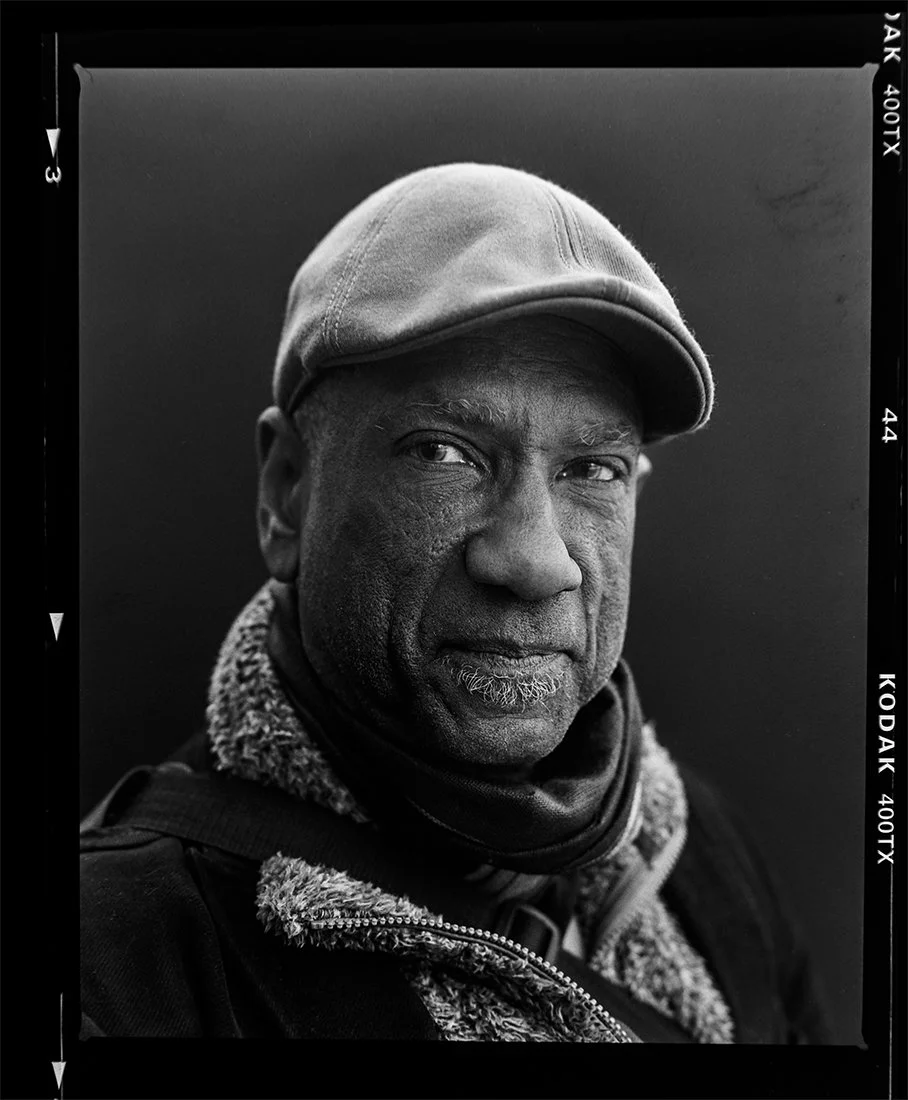
Photo by Philip Vukelich
Terence Taylor lives and writes in Gowanus, Brooklyn, with Shuri, his black cat and part-time muse. After years of comforting kids with award-winning children’s television written for PBS, Nickelodeon, and Disney, among others, at the turn of the last century he turned to scaring their parents in print. His short story Plaything appeared in Brandon Massey’s Dark Dreams, the first horror-suspense anthology of African American authors. Terence’s work was also in the next two volumes, and his short stories and nonfiction essays have since appeared in Lightspeed, Fantastic Stories of the Imagination, Nightmare Magazine, What the #@&% Is That?: The Saga Anthology of the Monstrous and the Macabre, The Canterbury Nightmares, Out There Screaming, and more. For five years he wrote READ THIS!, a quarterly book review column in Nightmare magazine, and is now the voice of their short story podcasts. His first novel, Bite Marks, is a modern-day Grand Guignol about the unintended but catastrophic creation of an undead infant. Graced with a starred review by Publishers Weekly that described it as “a gritty, screenworthy supernatural noir set in 1980s New York,” it was followed by Blood Pressure, set a generation later. Twenty years after book one a new menace endangers the human and vampire survivors. Terence will soon conclude his trilogy with Past Life, set in 2027, as a rising horror threatens to end the world.
All Inquiries: terencetaylorwriter@yahoo.com
Why write horror?
Because I was an Air Force brat, raised from first through fourth grade in a haunted French village called Évreux. The Griffin PR department for my first novel, 'Bite Marks', asked for a list of everywhere I'd lived. A Wikipedia entry on the town said as an archbishop passed through it in the 12th century, villagers begged him to rid them of a demon in the woods.
It took the shape of an enormous blue knight, galloped up and down the streets at all hours. The archbishop found the demon, Gobelin, but by his own account, was so impressed with the demon's wit and erudition he couldn’t bear to banish it to Hell. Instead he made it swear to leave the villagers alone, and bound him to the forest to watch the rise of Christianity.
When not in school, I roamed the wild wood behind our house, with friends and alone. There were bomb craters from the war half filled with water where we fished out salamanders and frogs, trees with snails we snatched and raced up and down our front doors at home. On the eve of my first horror novel's release I couldn’t help thinking how much time I spent there.
It’s not entirely impossible that much of my childhood was spent communing with an ancient spirit, a benign daemon*, whose name, Gobelin, is the source of the word goblin. Is it only coincidence that I loved horror movies, stories, and comics from an early age, and ended up writing horror as an adult? Or was it the influence of a magic being eager to escape rural France with a Catholic schoolboy headed back to the United States?
I like to think I was guided by my mystical muse deep into what I came to see as beautiful darkness. There, as the Dalai Lama did in his own Chamber of Horrors, I met my fears and embraced them as powerful allies. Ideal training for a future horror writer! When working on my intro for the Nightmare Magazine podcast I felt it was the perfect place to give Gobelin credit for all it did to inspire that boy to be the writer I am.
Terence Taylor
Gowanus, New York
*(from ancient Greek (daimōn), a supernatural spirit or lesser divinity that acts as an intermediary between gods and humans. Unlike modern malevolent "demons," daemons in Greek lore could be benevolent, many viewed as guardian spirits.)